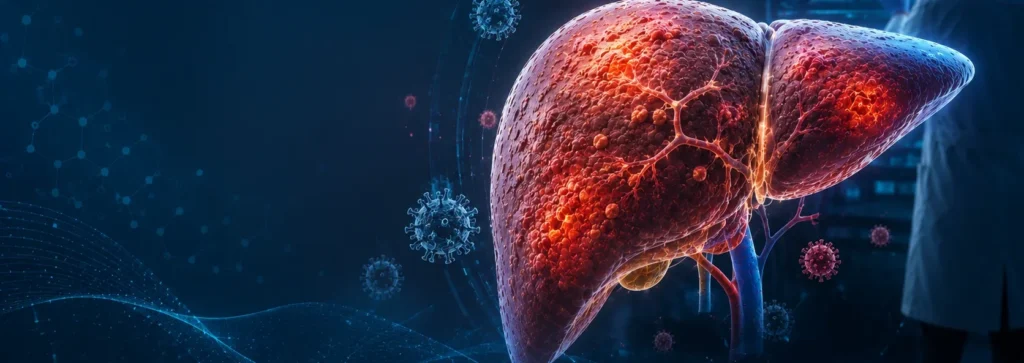
Fat in the liver is normal up to a point. When it crosses 5–10% of the liver’s weight, it becomes a medical problem. That’s NAFLD – Non-Alcoholic Fatty Liver Disease – and it’s now the most common liver condition in the world. What makes it tricky is that most people have no idea they have it.
Why Does Fat Build Up in the Liver?
The liver processes everything you eat and drink. When it gets overloaded – especially with refined carbohydrates, sugars, and saturated fats – it starts storing the excess as fat within liver cells. The biggest risk factors are:
- Type 2 diabetes or pre-diabetes – insulin resistance forces the liver to produce more fat
- Obesity, particularly abdominal fat
- High triglycerides or low HDL cholesterol
- Hypothyroidism and PCOS
- Rapid weight loss paradoxically, crash diets can worsen it
Age and genetics also play a role. Some people with a healthy weight develop fatty liver too – this is called lean NAFLD, and it’s more common in South Asians.
Stages of Fatty Liver
Simple fatty liver (steatosis): Fat accumulates but the liver isn’t inflamed. This stage is reversible with lifestyle changes.
NASH (Non-Alcoholic Steatohepatitis): The liver becomes inflamed and liver cells start to get damaged. This is where things get serious.
Fibrosis: Scar tissue forms around damaged liver cells.
Cirrhosis: Extensive scarring that disrupts the liver’s architecture and function. At this stage, damage is largely irreversible. NAFLD can also increase the risk of liver cancer, even without cirrhosis in some cases.
Symptoms
In the early stages – usually none. Some people notice mild fatigue that doesn’t improve with rest, a dull ache or heaviness in the upper right abdomen, or feeling full quickly after eating. These symptoms are non-specific, which is why fatty liver is often caught incidentally during an ultrasound done for another reason.
How Is It Diagnosed?
- Ultrasound: the most common first step
- Blood tests (LFTs): ALT and AST may be elevated, but can also be normal
- FibroScan: measures liver stiffness non-invasively
- Liver biopsy: the gold standard for distinguishing NASH from simple steatosis
Treatment: What Actually Works
There’s no approved drug for NAFLD yet. The most effective treatment remains lifestyle change and it genuinely works.
- Weight loss of 7–10% of body weight can significantly reduce liver fat and inflammation
- A Mediterranean diet – olive oil, vegetables, legumes, fish, whole grains – is the most evidence-backed approach
- Exercise, even without weight loss, improves liver fat. 150 minutes of moderate activity per week is the target
- Avoiding alcohol entirely, even though NAFLD is non-alcoholic
- Managing diabetes and cholesterol aggressively