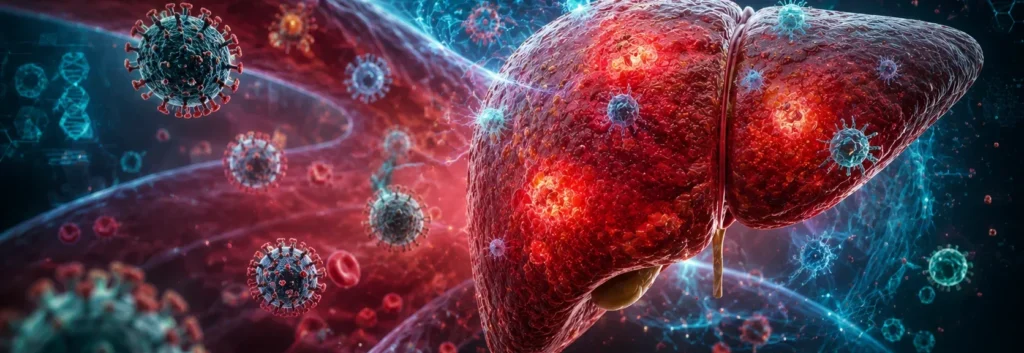
Liver Cancer Treatment: Liver cancer is one of the few cancers where the underlying risk factors are often known well in advance. Most cases develop in a liver already damaged by cirrhosis, chronic hepatitis, or years of heavy alcohol use. That means the people at highest risk can be monitored closely – and early-stage tumours can be caught when treatment options are most effective.
Types of Liver Cancer
Hepatocellular Carcinoma (HCC) is the most common primary liver cancer, accounting for over 90% of cases. It arises from hepatocytes and almost always develops in a diseased liver. Cholangiocarcinoma arises from bile duct cells – less common than HCC but increasingly recognized. Secondary (metastatic) liver cancer, when cancer from another organ spreads to the liver, is actually more common than primary liver cancer but is managed differently.
Who Is at Risk?
- Cirrhosis from any cause – viral hepatitis, alcohol, fatty liver
- Chronic Hepatitis B – even without cirrhosis, HBV can cause HCC
- Chronic Hepatitis C
- NAFLD/NASH
- Aflatoxin exposure – a fungal toxin found in stored grains, common in tropical regions
- Diabetes and obesity
Symptoms
Early HCC usually produces no symptoms. When symptoms appear: unexplained weight loss, loss of appetite, upper right abdominal pain or palpable mass, worsening jaundice, abdominal swelling, or sudden deterioration in a patient with known liver disease. Any of these in someone with liver disease should prompt urgent evaluation.
Surveillance – The Most Important Tool We Have
For patients with cirrhosis or chronic Hepatitis B, regular screening can detect tumours at a stage where curative treatment is still possible:
- Liver ultrasound every 6 months
- Alpha-fetoprotein (AFP) blood test alongside ultrasound
When surveillance detects a suspicious lesion, dynamic CT or MRI with contrast follows – HCC has a characteristic enhancement pattern that can diagnose the tumour without a biopsy in many cases.
Liver Cancer Treatment Options
Potentially curative: Surgical resection, liver transplantation (Milan Criteria), and ablation (RFA/MWA) for tumours under 3 cm.
Locoregional (intermediate-stage): TACE (Transarterial Chemoembolization) and SIRT/Radioembolization.
Systemic (advanced HCC): Targeted therapies (Sorafenib, Lenvatinib) and immunotherapy combinations such as Atezolizumab + Bevacizumab – now the standard first-line in eligible patients.